Views: 9 Author: Site Editor Publish Time: 2020-04-17 Origin: Site
1. Aluminum electrolytic capacitor: it is made of aluminum cylinder as negative electrode, which is filled with liquid electrolyte and inserted with a curved aluminum strip as positive electrode. It also needs to be treated with DC voltage to form an oxide film on the positive electrode. It is characterized by large capacity, but large leakage, poor stability, positive and negative polarity, suitable for power supply | voltage regulator filter or low-frequency circuit. When used, do not connect the positive and negative poles in reverse.
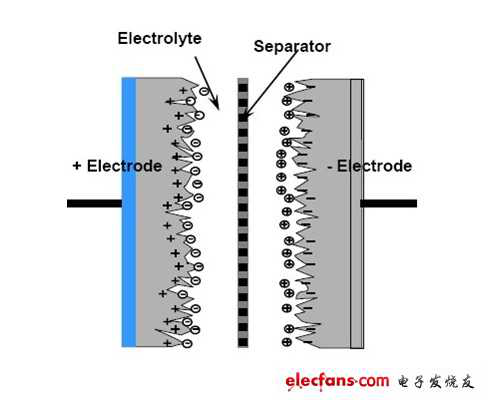
2. Tantalum-niobium electrolytic capacitor: it is made of metal tantalum or niobium as positive electrode, dilute sulfuric acid and other liquid as negative electrode, and oxide film formed on the surface of tantalum or niobium as medium. Its characteristics are: small size, large capacity, stable performance and long life. Large insulation resistance. Good temperature performance, used in equipment with higher requirements.
3. Ceramic capacitor: Use ceramic as medium. A silver layer is sprayed on both sides of the ceramic substrate, and then a silver film is fired to make a polar plate. Its characteristics are: small size, good heat resistance, low loss, high insulation resistance, but small capacity, suitable for high-frequency circuits. Ferroelectric ceramic capacitors have a larger capacity, but have larger losses and temperature coefficients, and are suitable for low-frequency circuits.
4. Mica capacitor: made of metal foil or silver layer sprayed on the mica sheet as the electrode plate. After the electrode plate and mica are laminated one by one, they are die-cast in bakelite powder or sealed in epoxy resin. Its characteristics are: small dielectric loss and large insulation resistance. The temperature coefficient is small, suitable for high-frequency circuits.
5. Film capacitor: The structure is the same as that of paper dielectric capacitor, the medium is polyester or polystyrene. Polyester film capacitors, with high dielectric constant, small size, large capacity and good stability, are suitable as bypass capacitors. Polystyrene film capacitors have low dielectric loss and high insulation resistance, but have large temperature coefficients and can be used in high-frequency circuits.
6. Paper dielectric capacitor: two pieces of metal foil are used as electrodes, sandwiched in extremely thin capacitor paper, rolled into a cylindrical or flat cylindrical core, and then sealed in a metal shell or an insulating material shell. It is characterized by its small size and large capacity. However, the inherent inductance and loss are relatively large, which is suitable for low-frequency circuits.
7. Metallized paper dielectric capacitor: The structure is basically the same as that of paper dielectric capacitor. It is covered with a metal film on the capacitor paper instead of metal foil. It is small in volume and large in capacity. It is generally used in low-frequency circuits.
8. Oil-immersed paper dielectric capacitor: it is to immerse the paper dielectric capacitor in specially treated oil to enhance its withstand voltage. It is characterized by large electric capacity and high withstand voltage, but large in size. In addition, in practical applications, the first is to choose different types of capacitors according to different uses; the second is to take into account the nominal capacity of the capacitor, the allowable error, withstand voltage, leakage resistance and other technical parameters; the third is for positive, For electrolytic capacitors with negative polarity, the positive and negative electrodes should not be reversed during welding.